Sunprints: The Cyanotype Printing Workshop

A Step-by-Step Workshop

How to Turn Sunlight, Water, and a Handful of Ferns and Wildflowers Into Gallery-Worthy Prussian Blue Prints You'll Be Proud to Frame

A forgotten 1842 sun-printing technique you can learn in one afternoon.

(No drawing. No painting. The sun does the art for you.)

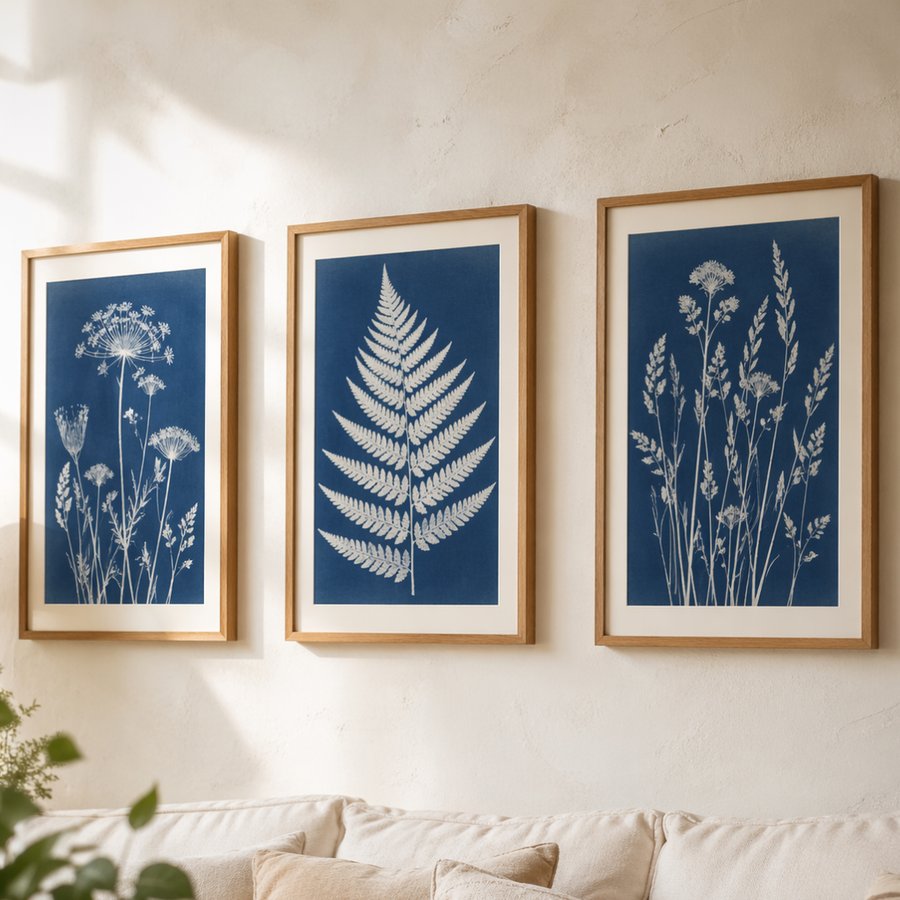
Three framed Prussian blue cyanotype botanical prints on a cream wall above a linen sofa

Imagine picking a handful of ferns and wildflowers from your neighborhood, laying them on a coated sheet of paper, and setting it out in the sun. Fifteen minutes later you carry it to the kitchen sink, rinse it under cool tap water, and watch as deep, rich Prussian blue floods the page around every leaf, every stem, every delicate vein. You lift the plants away and a ghostly white impression stares back at you, so crisp it looks like it belongs in a 19th-century botanical archive.

Imagine a wall in your home filled with blue-and-white botanical prints, each one more striking than the last. A friend walks in, stops, stares, and says, "Where did you buy these?" You pause for a second, smile, and say, "I didn't. I made them. With sunlight." The look on her face is the kind of thing you'll remember for weeks.

Imagine discovering that the entire process takes less than 20 minutes of hands-on work. That the supplies cost less than a dinner out. That there's no drawing, no painting, no artistic skill required at all. The sun does the printing. The water does the developing. You get to take credit for something that looks like it was pulled from a gallery wall.

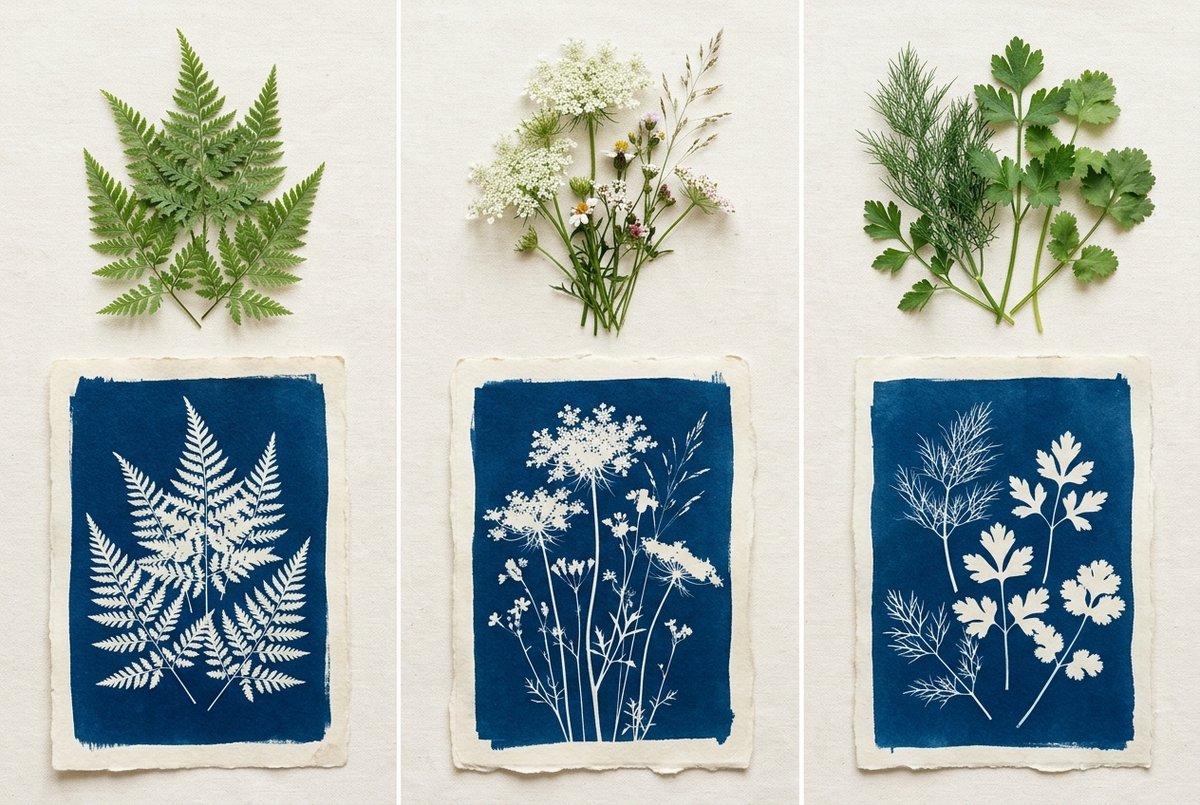
Three piles of raw botanicals (ferns, wildflowers, culinary herbs) above three matching finished cyanotype prints on cream paper showing the resulting Prussian blue silhouettes

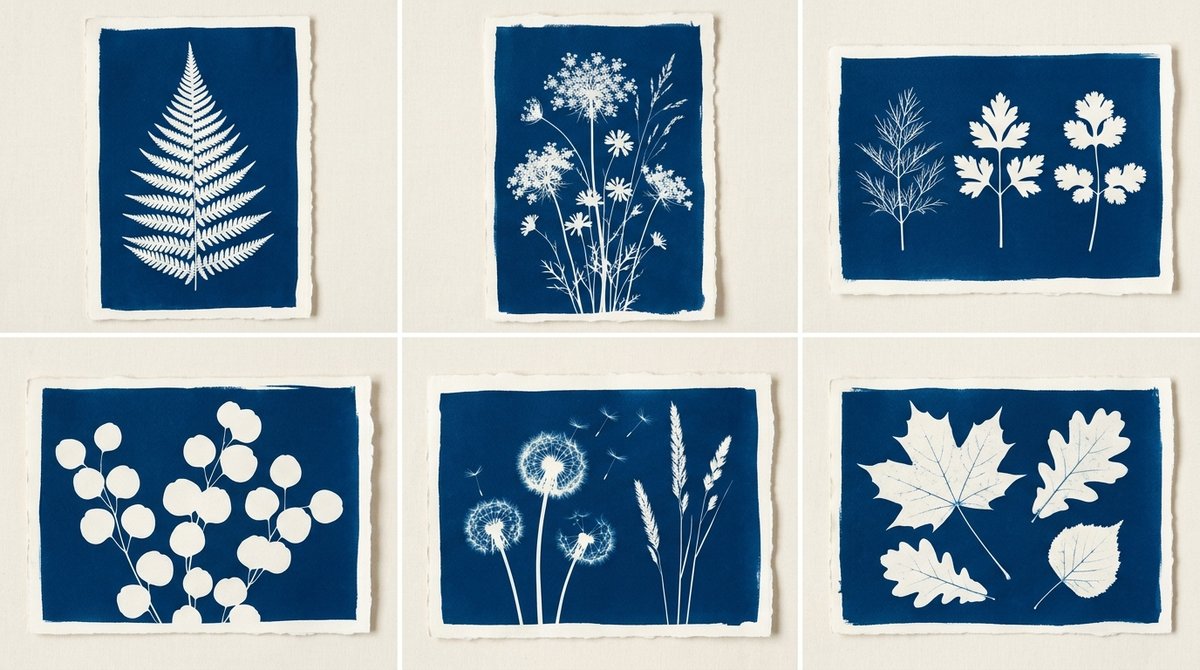
Every Print Is One of a Kind

The same simple process looks completely different depending on what you pick. A sprig of Queen Anne's lace from a roadside, a fern from your houseplant, a $3 bunch of dill from the produce aisle. Your botanicals become your palette.

Six cyanotype prints shown in a 3-by-2 grid: fern frond, Queen Anne's lace wildflowers, kitchen herbs (dill, parsley, cilantro), lunaria (honesty) seed pods, dandelion seed heads with grass stems, and autumn maple and oak leaves. Every print is deep Prussian blue with crisp white botanical silhouettes.

Why Cyanotype Looks So Impressive... And Is Way Easier Than You Think

The first time you see a deep, Prussian blue cyanotype (how to pronounce: SIGH-an-oh-type) print, it doesn't look like something a person made at home. It looks like something pulled from a 19th-century botanical archive. And your first thought is probably, "That's gorgeous... but I could never make that."

Here's why you can.

You don't need to draw. You don't need to paint. You don't need a photography degree or a single day of art school. The sun does the printing. The water does the developing. Your only job is to lay a plant on a sheet of paper and step outside.

And the supplies fit on one small kitchen shelf. Two powdered compounds that cost less than a dinner out, a single foam brush, and whatever catches your eye on a walk around the block or in the produce aisle on a Tuesday.

That forgotten sprig of dill wilting in your fridge drawer? That's your next print.
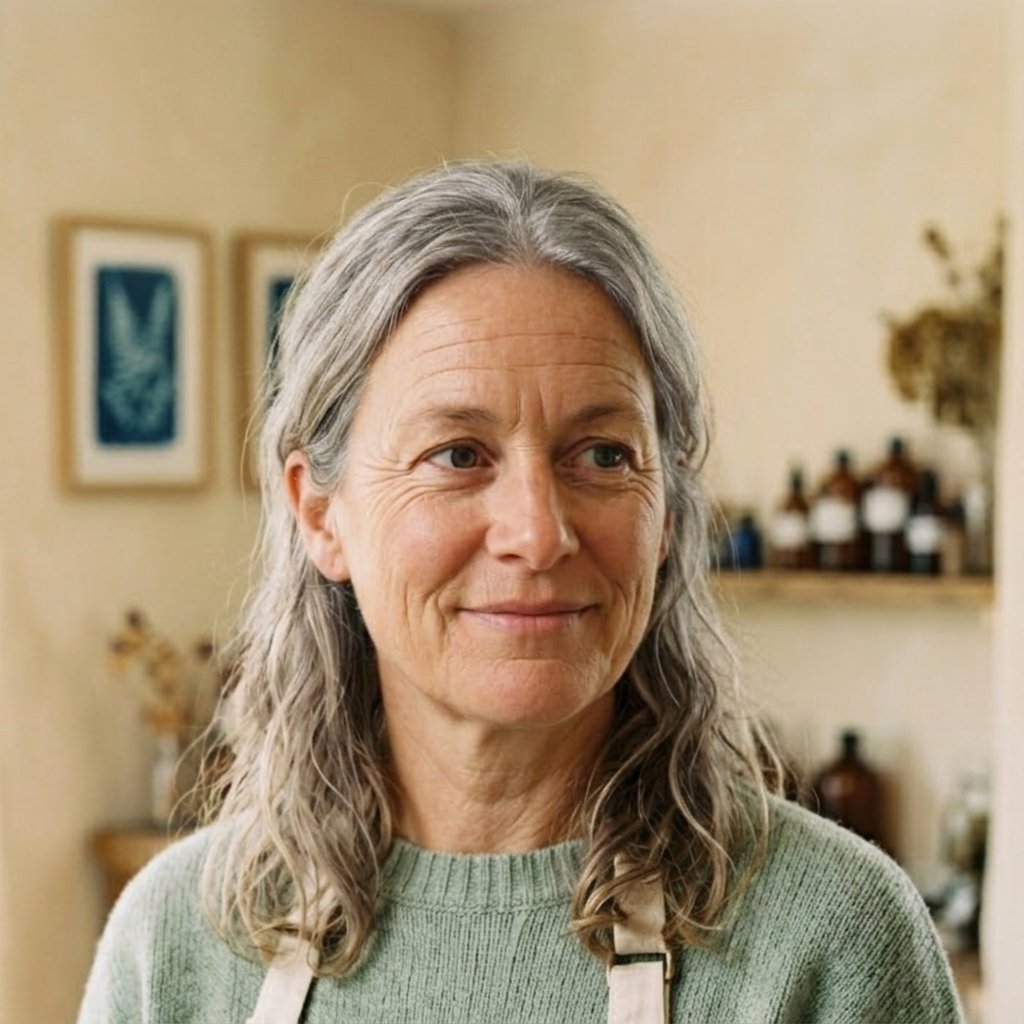
Elena M., cyanotype instructor, standing in her studio

Elena M.

Hey, I'm Elena. I work part-time at the library in a small Pacific Northwest town, and cyanotype has been my quiet Sunday-morning craft for a few years now.

What drew me in is how simple it is. A little sunlight, a little water, a fern from the yard, and you have something that looks like it belongs in an old natural history book. There's no drawing, no painting, no pressure to be "artistic." You set the plants out, you wait, and the sun does the work. I find it incredibly calming.

I live in a house with a big garden and a sunny patch of porch that has become my favorite place to print. The walk to gather plants is half the joy. Some mornings it's ferns from beside the driveway, some days it's herbs from the kitchen, and once in a while it's wildflowers from the trail behind our street.

Teaching this workshop is probably the most exciting thing I've done since I picked up the craft. Cyanotype shouldn't be a secret, and if I can help you fall in love with it the way I did, that's all I want.

Introducing Sunprints: The Cyanotype Printing Workshop

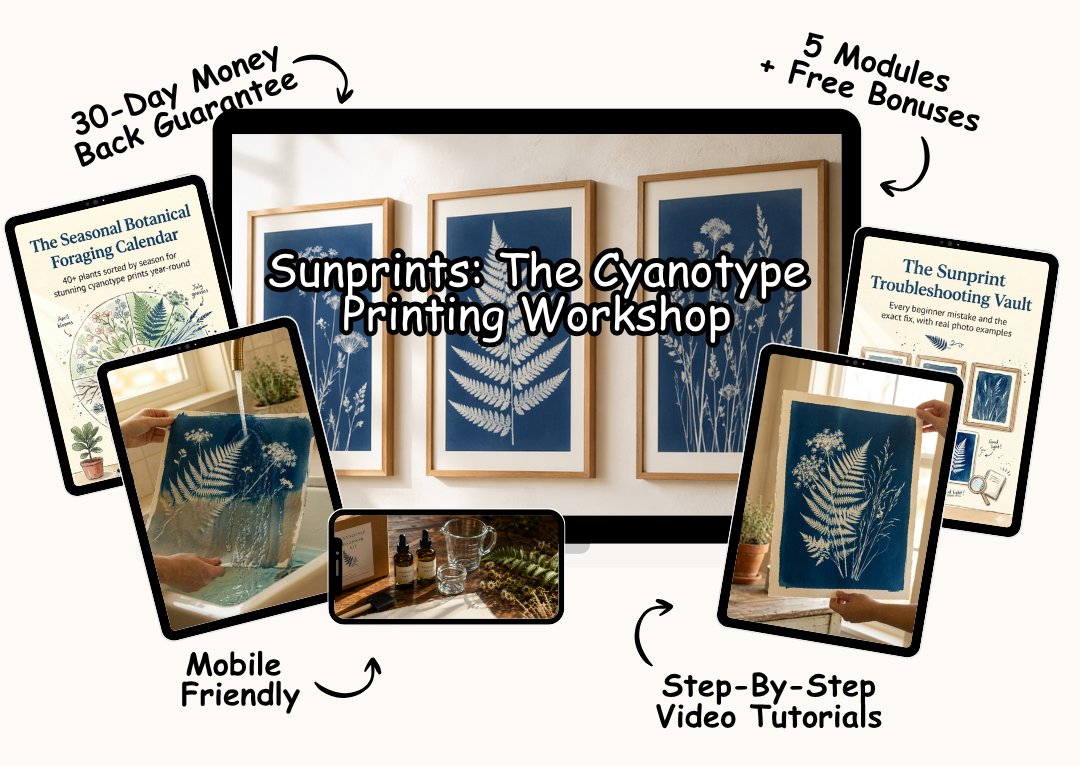
Sunprints: The Cyanotype Printing Workshop course bundle preview showing five video modules and three bonus guides

Sunprints is a complete, step-by-step system that takes you from curious beginner to confident botanical printmaker in a single weekend. No fluff. No filler. No rambling history lectures. Just clear, visual instruction you can follow with a cup of coffee in hand.

Every technique inside has been refined over years of Sunday-morning printing, working out the small details that separate a flat, blotchy print from a clean, saturated one.

This is the workshop I wished existed when I started. Instead of spending two years figuring out why your prints keep fading and your edges keep coming out muddy, you'll have the answers in a single afternoon.

What You'll Learn

Five video modules. Practical, hands-on, zero fluff.

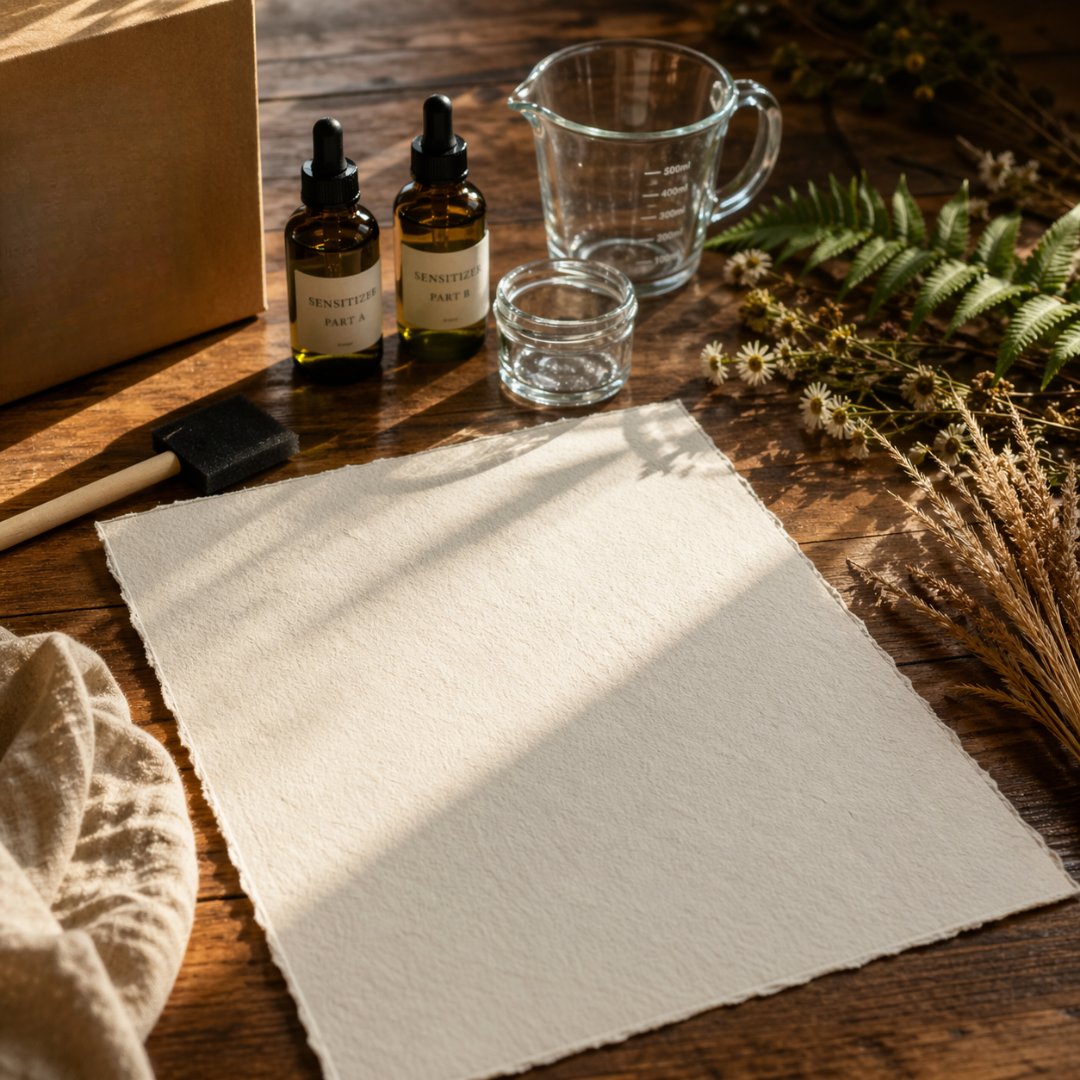
Module 1: Cyanotype supplies laid out on a wood table including sensitizer bottles, a foam brush, handmade paper, and dried botanicals

Module 1

Materials, Paper, and Setup

Everything you need before your first print. Pick the right paper, mix the sensitizer correctly, and set up your workspace so nothing trips you up mid-session.

  • The exact watercolor paper brand that holds deep Prussian blue for decades, plus the three popular papers that disintegrate the second they hit water
  • How to mix ferric ammonium citrate and potassium ferricyanide in the right ratio so every print comes out saturated instead of washed out
  • Why your kitchen table is the perfect cyanotype studio, and the one overhead light you have to switch off before opening the sensitizer bottles
  • How to store your coated paper so it stays usable for weeks, not hours. Most beginners waste half their paper stack the first week because nobody told them this
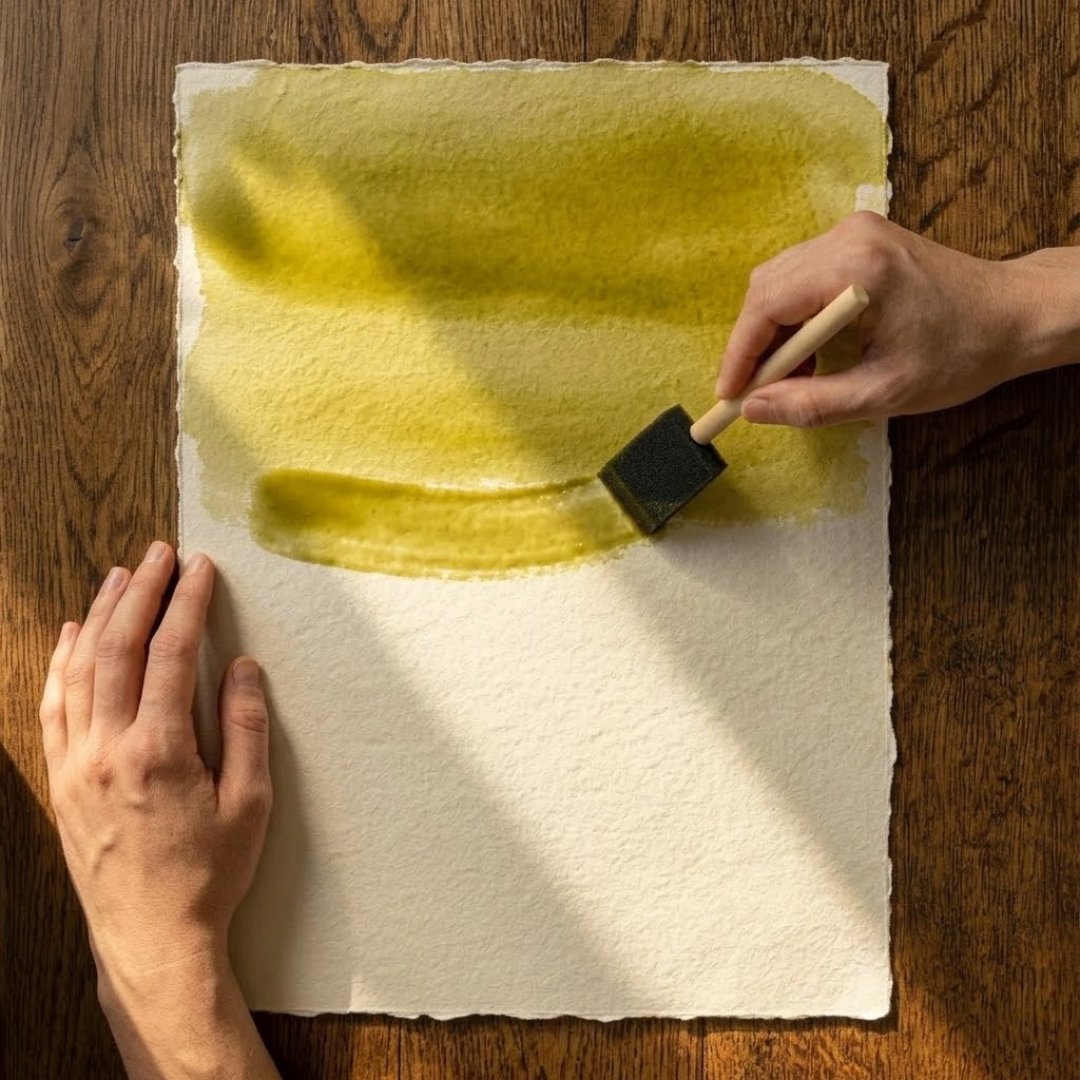
Module 2: A hand brushing yellow-green cyanotype sensitizer onto a sheet of handmade paper with a foam brush

Module 2

The Single Brush Stroke That Separates a Frame-Worthy Print From a Wasted Sunday

The 60-second coating technique borrowed from Japanese woodblock printing that turns a plain sheet of paper into the foundation of a gallery-ready print.

  • The specific way to hold and angle your brush for perfect, even, streak-free coverage across the entire sheet (most beginners hold the brush the wrong way, and it's the single biggest reason their prints come out patchy)
  • The 3-second visual test that tells you whether your coat is the right thickness before you ever set the paper in the sun (too thin and the print fades within days, too thick and you get dark streaks running through every leaf)
  • The exact Japanese brushwork technique that edge-to-edge coats a sheet in under 60 seconds with no streaks, no drips, no missed corners
  • How to coat four sheets in ten minutes and stack them safely to dry, so you can prep a full afternoon of printing in a single short session
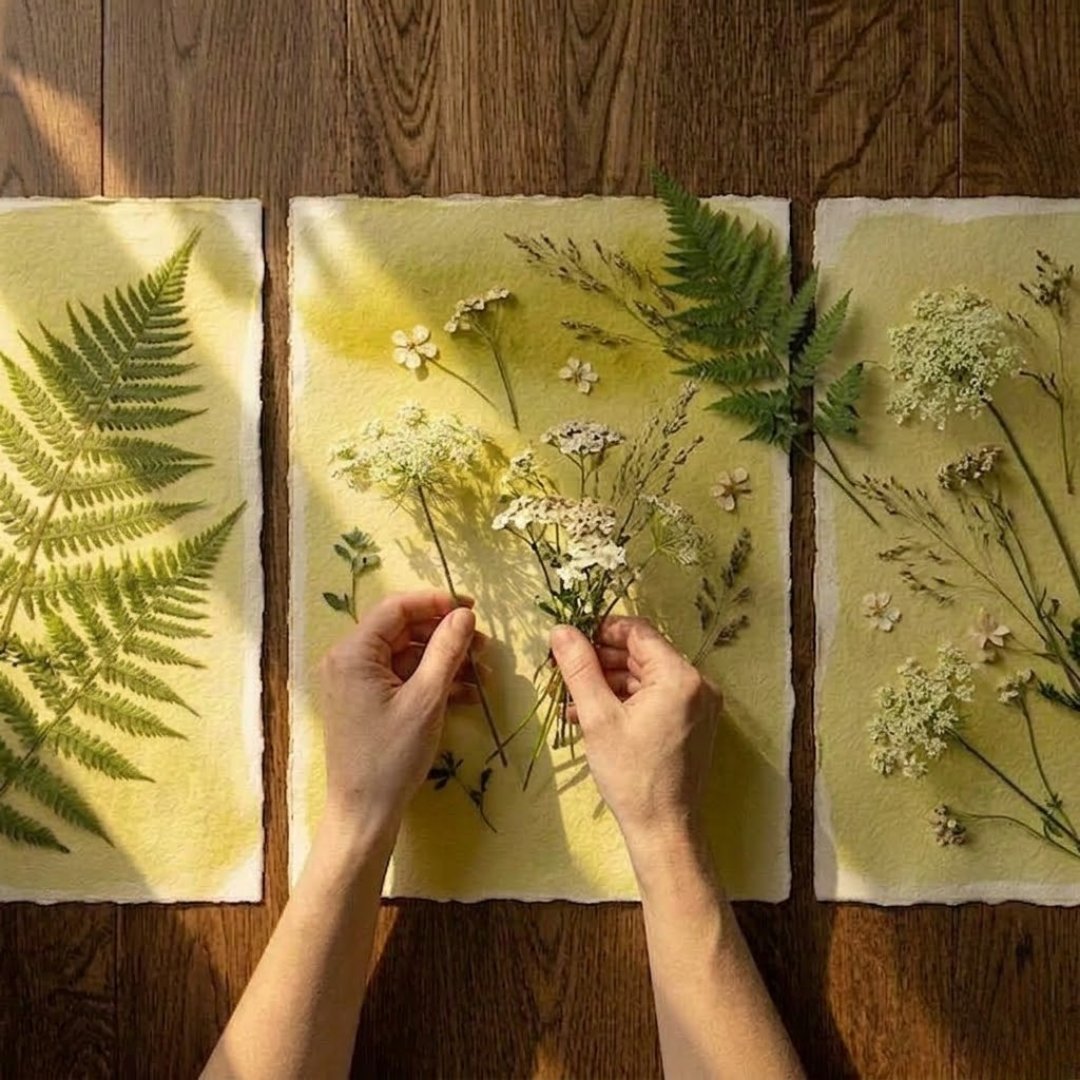
Module 3: Hands arranging Queen Anne's lace, wildflowers, and ferns on three coated sheets of paper

Module 3

Arranging Ferns, Flowers, and Found Objects Like a Victorian Botanist

How to turn grocery-store dill, neighborhood weeds, and pressed leaves into compositions so elegant your friends will swear they came from a 19th-century natural history museum.

  • The simple composition principle that makes any arrangement of plants look intentional, elegant, and artistic (it's called the rule of asymmetry, and once you see it you can't unsee it in every beautiful print on Pinterest)
  • The truth about fresh versus pressed botanicals. Most online tutorials get this completely backwards, which is why their prints have blurry, undefined edges where the details should be crisp
  • Which plants, herbs, and garden finds produce the most breathtaking silhouettes, and which ones disappear into a dark smudge (including the three grocery store herbs that photograph like museum specimens and the one common garden plant that almost never works)
  • How to build layered compositions with multiple depths of foliage, so your prints look rich and complex instead of flat
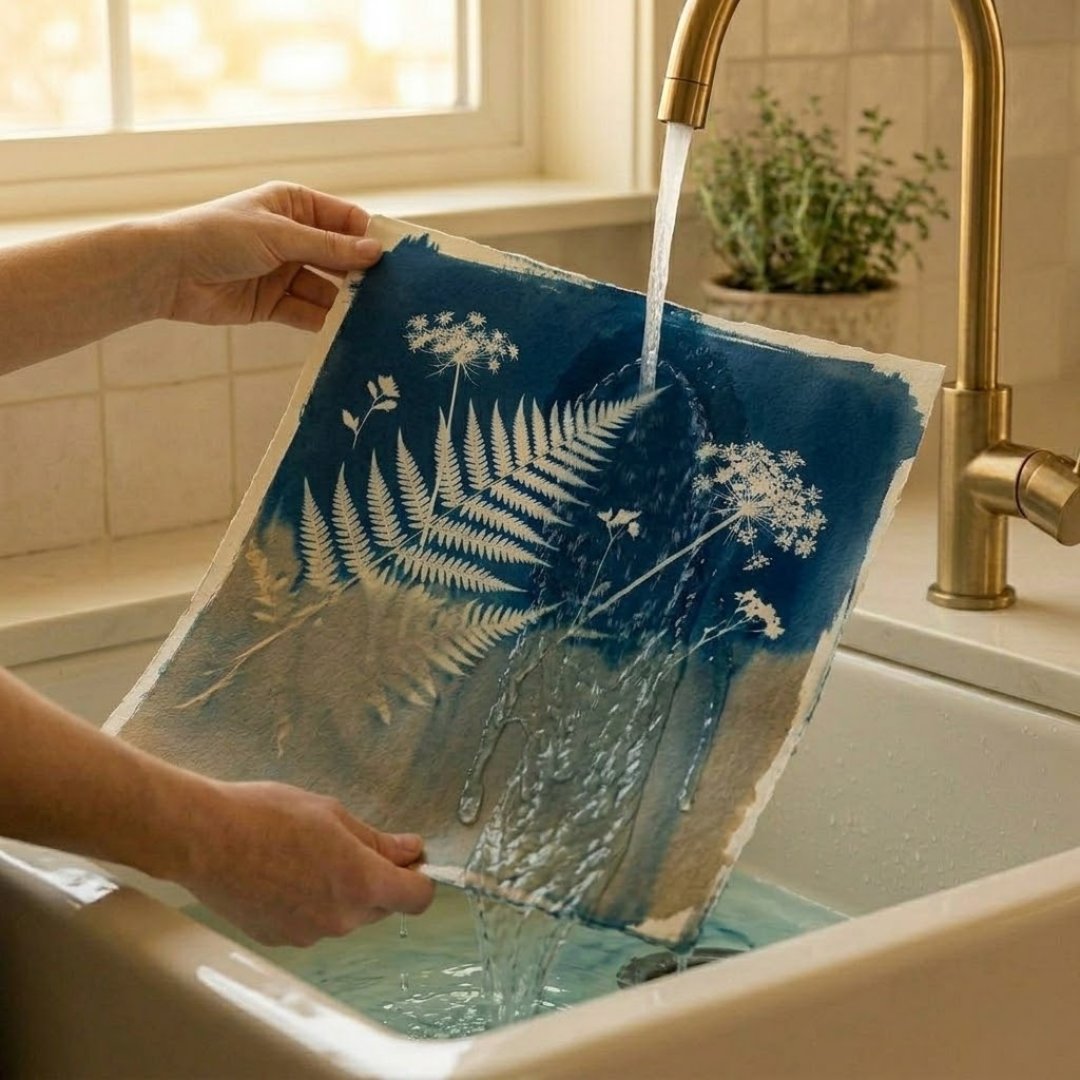
Module 4: A cyanotype print being rinsed in a sink, deep Prussian blue color emerging around the white fern silhouette

Module 4

The Moment of Magic: Sunlight, Water, and the Reveal That Hooks You for Life

The exact exposure and rinse process that turns a yellow-green coated page into the deep, saturated Prussian blue print that stops people in their tracks.

  • How to read the sun and time your exposure perfectly without a timer, clock, or app (the visual cue that tells you exactly when your print is ready to come inside, every time, in every season, in every weather)
  • Why overcast days often produce better prints than full sun, and the surprising reason certain botanicals look richer when printed in diffused light
  • The 30-second rinse technique that transforms your coated paper from a dull grey-green sheet into a breathtaking, permanent, deep-blue print before your eyes. This is the moment that converts curious hobbyists into lifelong cyanotype artists
  • How to set and protect the color after rinsing so your prints hold their depth beautifully on the wall, using a 90-second finishing step most beginners skip entirely
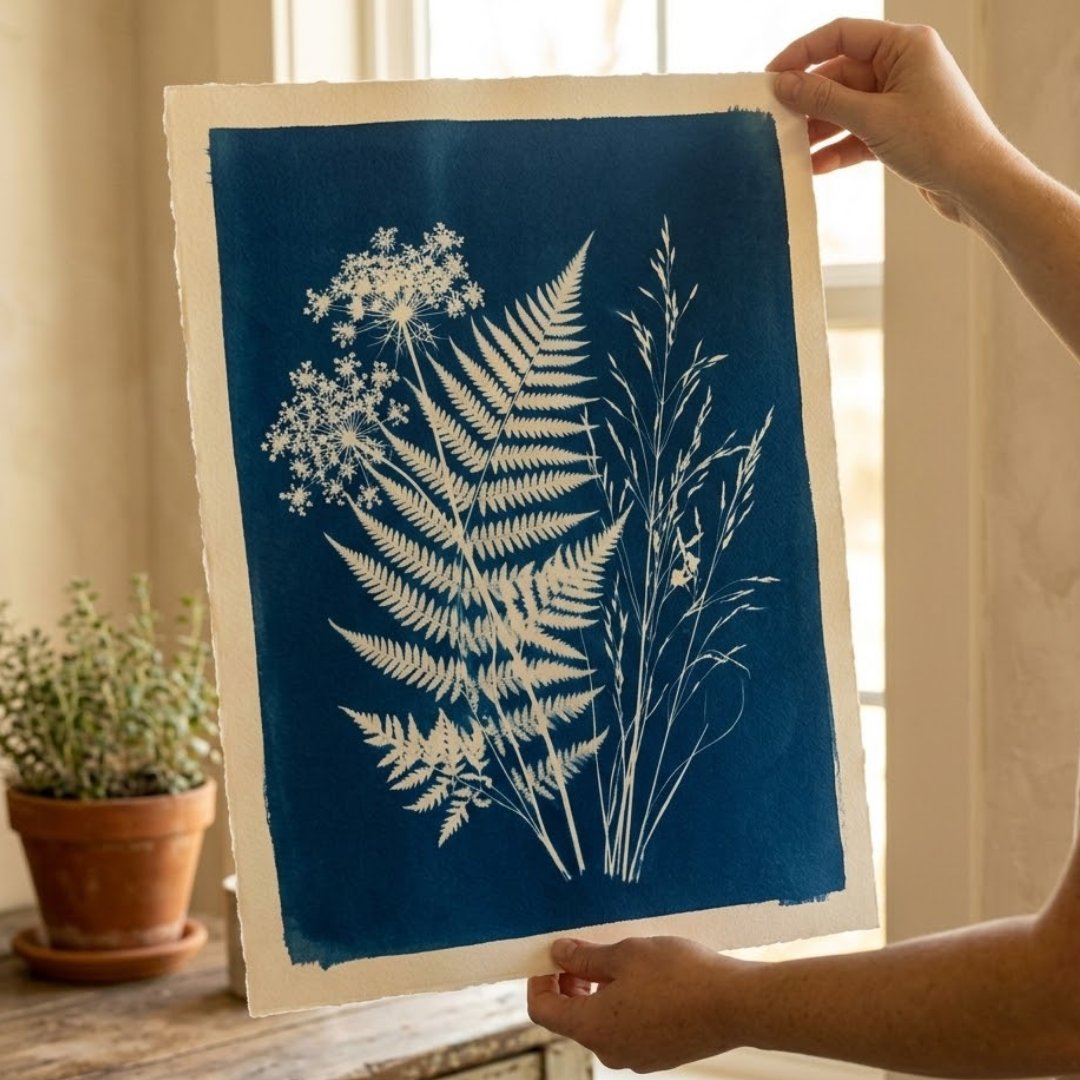
Module 5: Hands holding up a finished Prussian blue cyanotype print with multiple botanical silhouettes, ready to frame

Module 5

From Print to Keepsake: How to Finish, Flatten, and Protect Your Prints Like a Professional

The finishing process that turns a damp, curled sheet of paper into a permanent, gallery-ready print you'll still be proud of in twenty years.

  • The 90-second color-setting step most beginners skip that prevents your prints from fading, yellowing, or washing out on the wall (the difference between a print that lasts two weeks and one that lasts decades)
  • How to properly dry, press, and flatten your finished prints so they come out perfectly flat, uncurled, and ready to frame, using nothing but the cookbooks on your shelf
  • The archival storage method that protects your prints from humidity, UV damage, and acid bleed-through, without expensive supplies or a professional frame shop
  • How to decide which prints are your "keepers" worth framing and which should be repurposed for practice, cards, or gifts (a simple quality checklist that teaches your eye to recognize gallery-worthy work from your own hands)

3 Free Bonuses (Included Today)

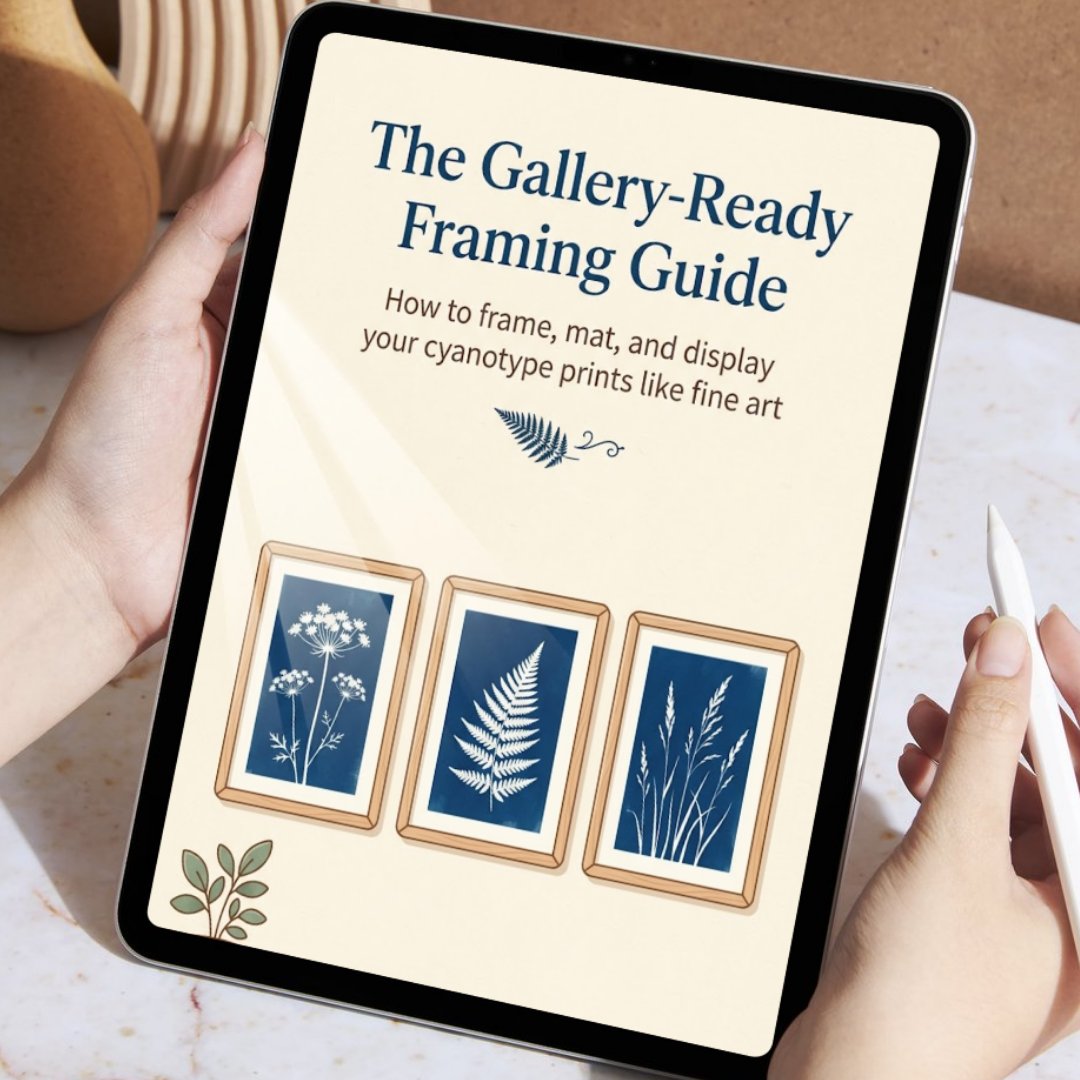
FREE BONUS Bonus 1 preview on a tablet: The Gallery-Ready Framing Guide showing framed cyanotype prints

$37 Value. Yours FREE

The Gallery-Ready Framing Guide

Your prints are done. Now make them look like they came from a downtown gallery. This guide walks you through matting, mounting, and framing your cyanotype prints using materials from any craft store, so every finished piece looks like fine art instead of a craft project.

  • The single most important framing decision that protects your prints from UV fading (get this wrong and your best work will start fading within six months, no matter how carefully you made it)
  • How to mat and mount a cyanotype print for under $8 using IKEA frames that look nearly identical to a $150 custom job
  • The professional framer's trick for making deckled torn paper edges look intentional, elegant, and expensive, instead of looking like you couldn't find a paper cutter
  • How to build a cohesive gallery wall of cyanotype prints that looks curated rather than crafty, including spacing, pairing, and orientation principles most people get wrong
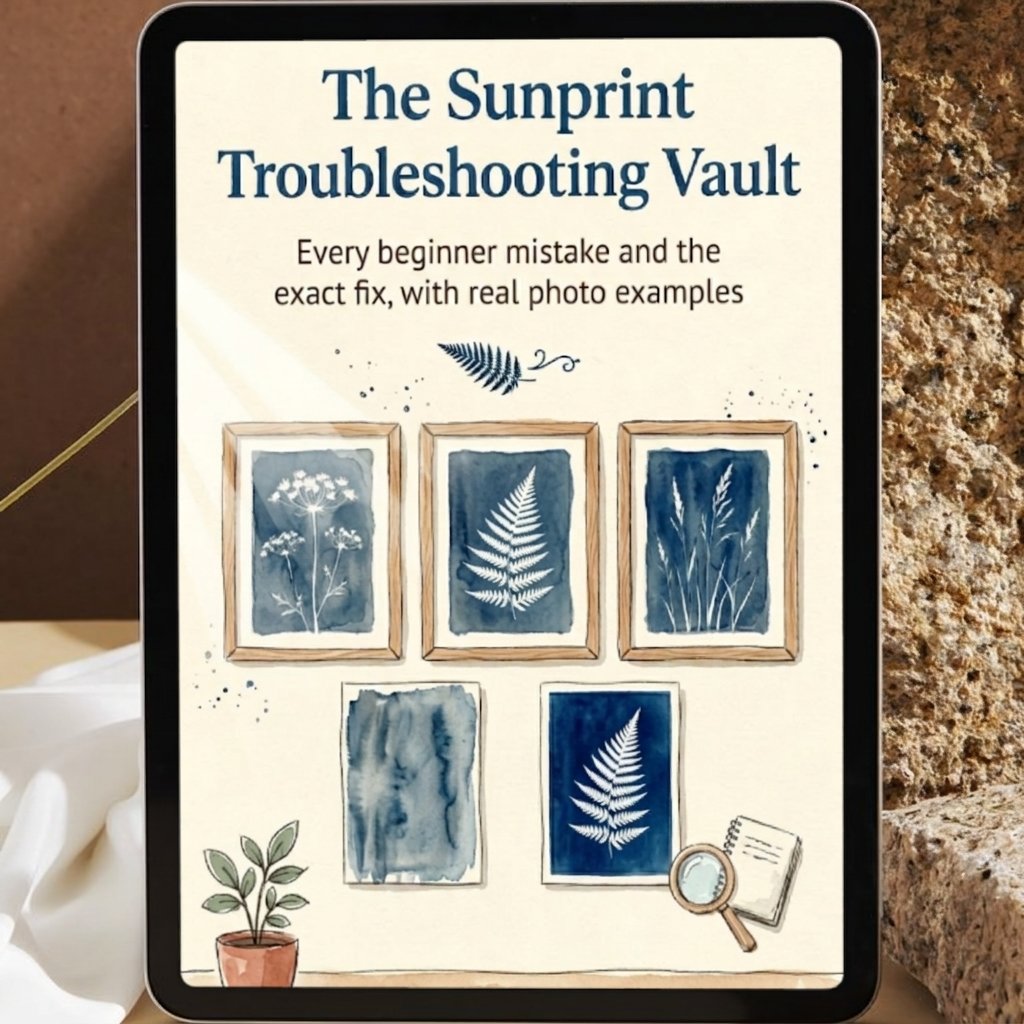
FREE BONUS Bonus 2 preview on a tablet: The Sunprint Troubleshooting Vault, covering every beginner mistake and the exact fix with cyanotype example thumbnails

$47 Value. Yours FREE

The Sunprint Troubleshooting Vault

Every beginner hits the same dozen problems in their first month of printing. Faded prints. Streaky coating. Muddy edges. Blurry plant impressions. Yellow staining. This guide gives you the exact cause and the exact fix for every one of them, with real photo examples of the problem and the correction, so you'll never waste a Sunday staring at a ruined print again.

  • Why your prints come out pale even when you followed every step perfectly (the single most common beginner mistake and the 30-second fix)
  • How to save a print that's come out too dark, too blotchy, or too uneven (most tutorials tell you to throw it out, but three rescue techniques actually work)
  • The real reason your blues are washing out during the rinse, and the simple timing change that makes the difference between a permanent print and one that fades on your wall
  • The humidity, temperature, and weather conditions that quietly sabotage your prints without you ever realizing, and how to work around them in any climate
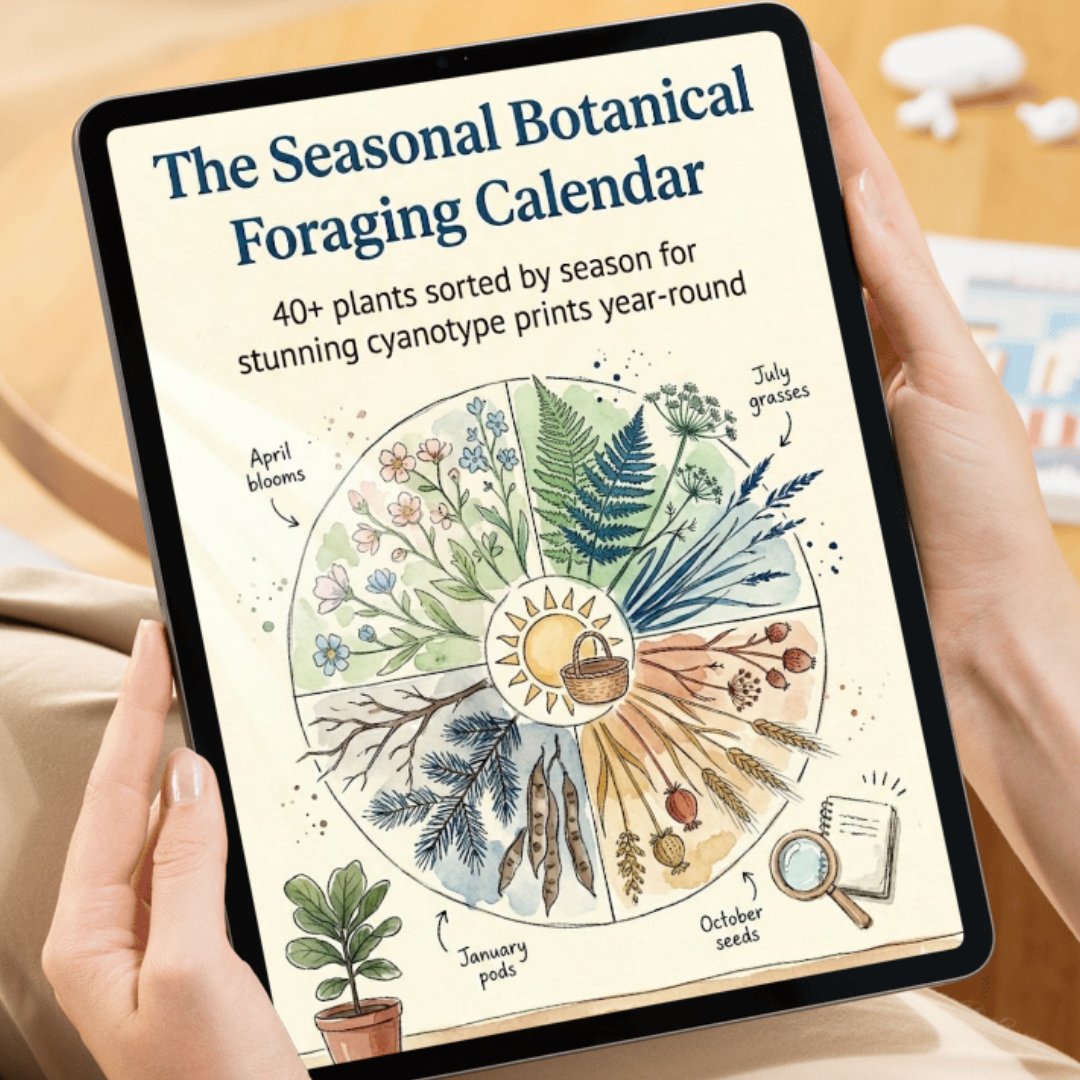
FREE BONUS Bonus 3 preview on a tablet: The Seasonal Botanical Foraging Calendar showing plants sorted by month

$27 Value. Yours FREE

The Seasonal Botanical Foraging Calendar

Never run out of stunning plant material to print with, in any season. This visual calendar shows you exactly which wild plants, garden specimens, and grocery store botanicals produce the most breathtaking impressions in every month of the year, so you're printing beautifully from January to December.

  • 40+ plants sorted by season, each rated for print quality and ease of use (including a dozen most cyanotype artists have never heard of)
  • The truth about flowers vs leaves. 3D petals almost always fail, but there are four specific flowers that print beautifully, and most people would never guess which ones
  • Why you should never collect plants immediately after rain, and the 2-hour window after picking that produces the crispest, most detailed silhouettes
  • The five grocery store herbs and produce aisle finds that print like museum specimens, available year-round for under $10 total

For Just $47 You Get Everything

The full price of Sunprints: The Cyanotype Printing Workshop is $97. But that's not the price you'll be paying today.

The page you're looking at right now is a beta test. I've poured everything I know into this workshop: every technique, every shortcut, every little detail I've figured out over years of Sunday-morning printing. And I want to make sure every single student who joins gets the personal attention they need to actually finish a print they're proud of.

I'm honestly not sure I can give that level of support to more than 100 people at once. So I've decided: the first 100 students get in at a fraction of the $97 price. If this page is still live, you can get instant access to the complete workshop, all five modules, and every bonus for just $47.

Sunprints: The Cyanotype Printing Workshop course bundle
  • The Complete Sunprints Cyanotype Workshop $97 value
  • Bonus: The Gallery-Ready Framing Guide $37 value, FREE
  • Bonus: The Sunprint Troubleshooting Vault $47 value, FREE
  • Bonus: The Seasonal Botanical Foraging Calendar $27 value, FREE
Total Value: $208
You Pay: $47

ONE-TIME PURCHASE. LIFETIME ACCESS FOREVER.

Start Making Your First Prussian Blue Print Now

Lock in the reduced beta price before the first 100 spots are gone.

🔒 Secure Payment 256-bit SSL 30-Day Guarantee PayPal Visa / MasterCard

Maybe You're Thinking...

"But I'm not artistic at all." You don't make the art. The sun makes the art. You arrange a few leaves on a piece of paper and step outside. If you can pick up a fern and lay it flat, you already have every skill this process requires.

"Are the chemicals safe?" Safer than bleach. Safer than hair dye. Two powdered compounds that schools use with six-year-olds. No fumes, no ventilation, no gloves required. The word "cyanide" in the name refers to the chemical's structure, not its toxicity.

"I don't have a garden." A bunch of dill from the produce aisle. A sprig of fern from a houseplant. A $3 grocery-store bouquet. Some of the most gorgeous cyanotype prints start with a single trip down the vegetable aisle.

30-DAY GUARANTEE

30-Day Money Back Guarantee

You don't have to make the final decision now. Get instant access to the full Sunprints Workshop right now and try it out. Watch the videos. Follow along with Module 1. Mix your first batch of sensitizer and make your first print. If at any point within 30 days you decide it's not for you, for any reason at all, just send a quick email and you'll receive every penny back within 24 hours. NO QUESTIONS ASKED. No hoops to jump through. No awkward conversation. No guilt. You either love what you create or you get a full refund. That's it.

Frequently Asked Questions

The moment you click the button and complete your purchase, you get instant access to every module, every video, and every bonus. The course is completely pre-recorded, so you can start right now at 2 AM or next Saturday morning, whatever works for your schedule. Watch one module a day or binge the entire thing in one afternoon. There's no schedule to follow and no deadlines to meet.

None at all. Cyanotype doesn't involve drawing, painting, or any traditional art skill. The sun creates the image; you arrange the plants and follow the process. Some of our best student work comes from people who've never taken an art class in their life.

A pre-mixed sensitizer kit ($20 to $30 on Amazon), watercolor paper ($10 to $15), a foam brush ($3 to $5), and a piece of glass or an old picture frame to press your botanicals flat ($10 to $15). Starting from scratch runs roughly $50 to $75, including everything you need for multiple prints. After that, refill supplies are just paper and sensitizer since the glass and brush are reusable.

Cyanotype is one of the safest photographic processes. Ferric ammonium citrate and potassium ferricyanide are two of the mildest chemicals used in any alternative printing method. No fumes, no special ventilation needed. Elementary schools use this exact process with children. Just practice normal kitchen caution: don't eat the powder, keep it away from pets, and rinse your hands after handling. The word "cyanide" in the name refers to the compound's chemical structure, not toxicity; it's chemically stable and non-toxic in this form.

You can watch all the video lessons in a single afternoon. Most students make their first print the same day they start. The course is designed so you can learn and produce results in one sitting, then come back for the advanced techniques whenever you're ready.

One-time payment. One hundred percent. No subscriptions, no monthly charges, no hidden fees, and no "premium tier" waiting on the other side. You pay once and you own access to the entire course and all bonuses permanently.

You're covered by a full 30-day money-back guarantee. If the course isn't for you for any reason, just send one email and you'll have your money back within 24 hours. No questions asked. No forms. No awkward conversation. We take on all the risk so you don't have to.

Forever. Lifetime access means exactly that: you can watch and re-watch every module as many times as you want, whenever you want, for as long as the internet exists. If we ever update or add new content, you get that too at no extra charge.

The entire course is video-based. You watch Elena demonstrate every step in real time: mixing, coating, composing, exposing, and rinsing. Every lesson is filmed so you can see exactly what her hands are doing and follow along at your own pace. You also get downloadable reference guides for each module. Everything is accessible on your phone, tablet, or computer.

Free tutorials give you fragments. A 10-minute video on "how to do cyanotype" skips the invisible details that make or break your prints: coating thickness, paper selection, humidity management, exposure timing, and rinse technique. This course is a complete, structured system built from years of careful testing and refining. You don't have to piece together conflicting advice from 15 different creators and hope it works.

Completely. Your payment is processed through a secure, SSL-encrypted checkout page using trusted payment processors including PayPal, Visa, Mastercard, and American Express. Your credit card information is never stored on our servers. It's the same level of security you'd experience buying from any major online retailer.

Ready to Turn Sunlight and a Handful of Ferns Into Your First Piece of Wall Art?

I hope you'll love your first afternoon of printing as much as I still love every one of mine. There's something about watching a deep, saturated blue appear on a plain sheet of paper that I don't think I'll ever stop finding magical. Looking forward to seeing what you make.

Elena M.

ONE-TIME PURCHASE. LIFETIME ACCESS FOREVER.

$97 $47
Start Making Your First Prussian Blue Print Now

Lock in the reduced beta price before the first 100 spots are gone.

🔒 Secure Payment 256-bit SSL 30-Day Guarantee PayPal Visa / MasterCard